
TESTING ARCTIC DEFENSES
Canada aims to show it can go solo in Northwest
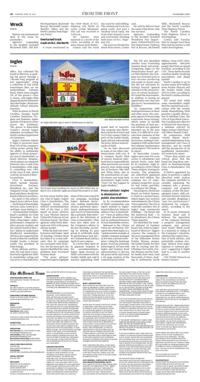
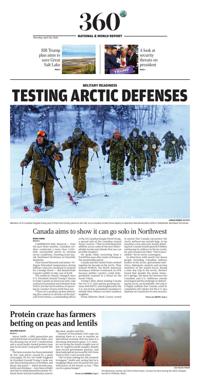
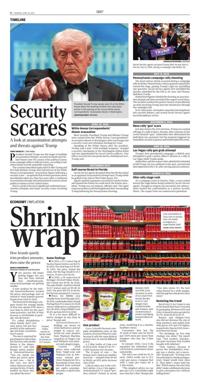
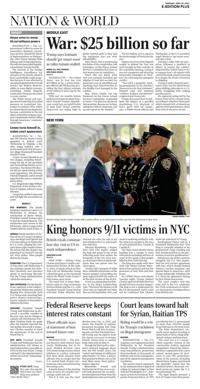
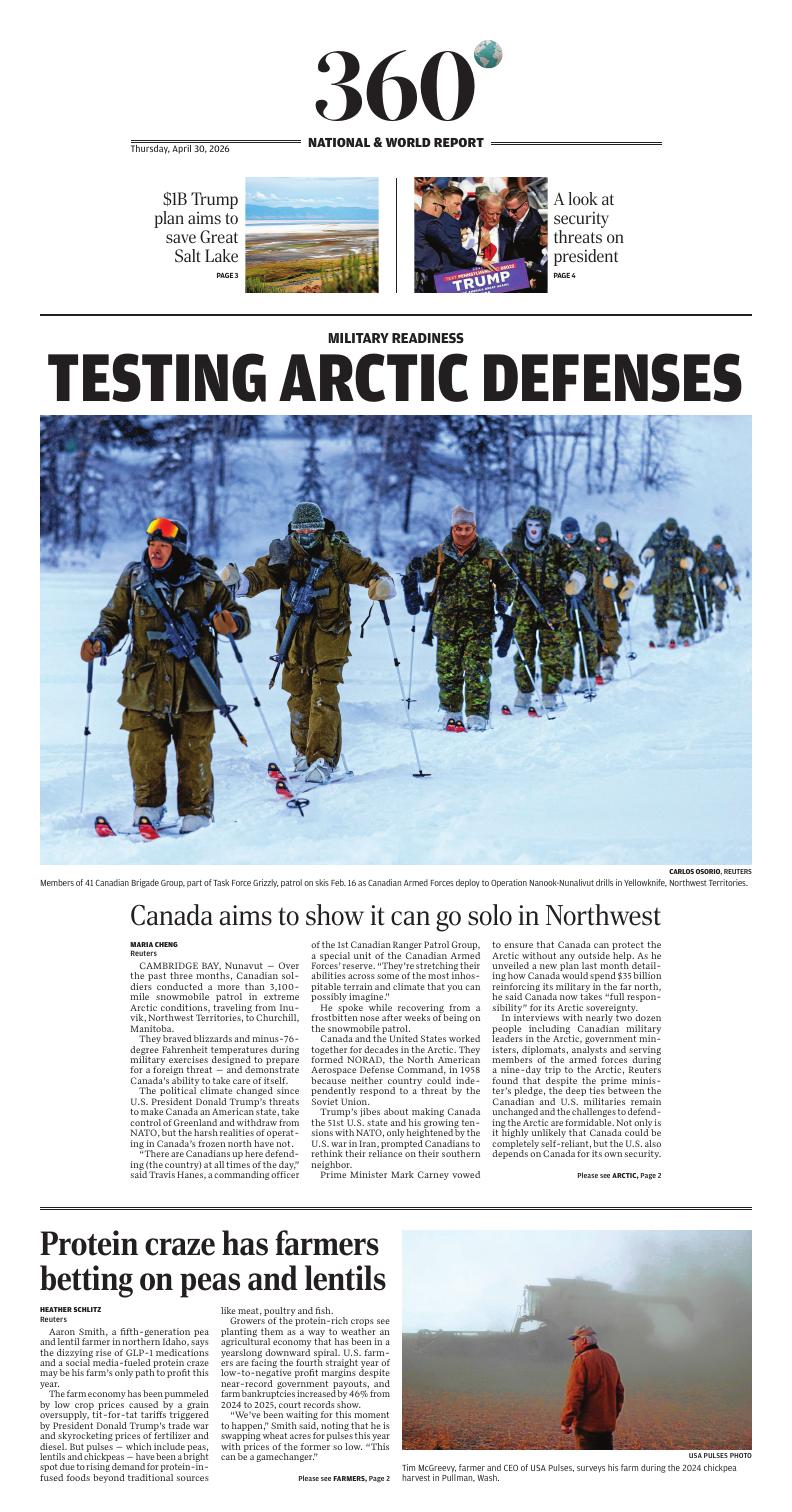
Members of 41 Canadian Brigade Group, part of Task Force Grizzly, patrol on skis Feb. 16 as Canadian Armed Forces deploy to Operation Nanook-Nunalivut drills in Yellowknife, Northwest Territories.
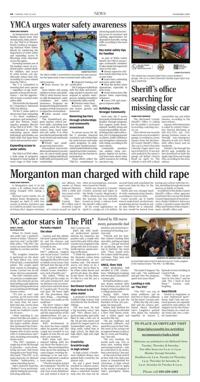
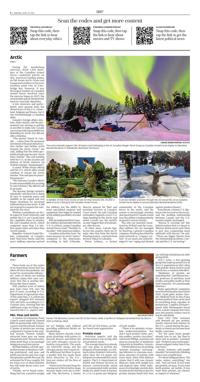
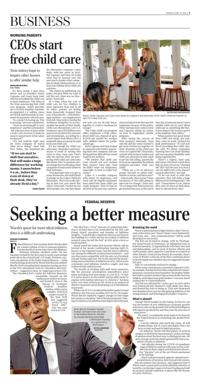
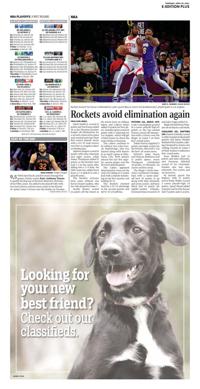
The aurora borealis appears Feb. 18 above a tent belonging to the 1st Canadian Ranger Patrol Group as Canadian Armed Forces deploy to Operation Nanook-Nunalivut in Yellowknife, Northwest Territories.
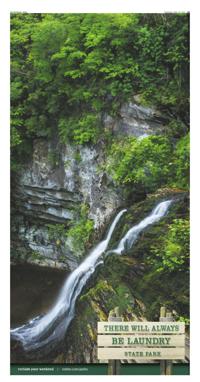
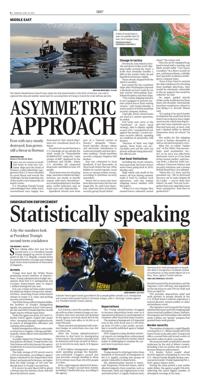
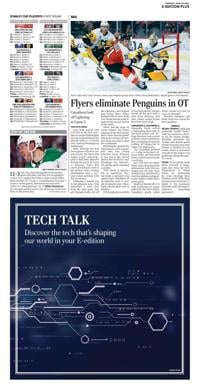
A member of Task Force Grizzly arrives for final remarks Feb. 20 after a week of arctic training by the Canadian Armed Forces.
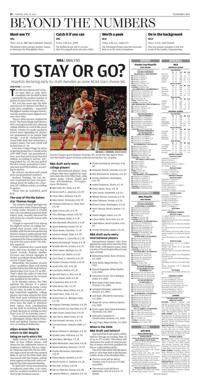
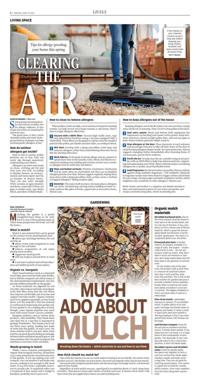
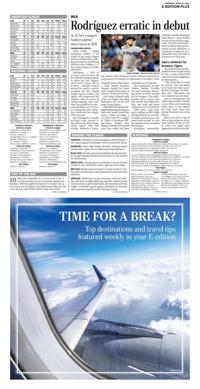
A service member practices through-the-ice rescue Feb. 20 as Canadian Armed Forces deploy to annual Operation Nanook-Nunalivut drills.
MILITARY READINESS
CAMBRIDGE BAY, Nunavut — Over the past three months, Canadian soldiers conducted a more than 3,100mile snowmobile patrol in extreme Arctic conditions, traveling from Inuvik, Northwest Territories, to Churchill, Manitoba.
They braved blizzards and minus-76degree Fahrenheit temperatures during military exercises designed to prepare for a foreign threat — and demonstrate Canada's ability to take care of itself.
The political climate changed since U.S. President Donald Trump's threats to make Canada an American state, take control of Greenland and withdraw from NATO, but the harsh realities of operating in Canada's frozen north have not.
"There are Canadians up here defending (the country) at all times of the day," said Travis Hanes, a commanding officer of the 1st Canadian Ranger Patrol Group, a special unit of the Canadian Armed Forces' reserve. "They're stretching their abilities across some of the most inhospitable terrain and climate that you can possibly imagine."
He spoke while recovering from a frostbitten nose after weeks of being on the snowmobile patrol.
Canada and the United States worked together for decades in the Arctic. They formed NORAD, the North American Aerospace Defense Command, in 1958 because neither country could independently respond to a threat by the Soviet Union.
Trump's jibes about making Canada the 51st U.S. state and his growing tensions with NATO, only heightened by the U.S. war in Iran, prompted Canadians to rethink their reliance on their southern neighbor.
Prime Minister Mark Carney vowed to ensure that Canada can protect the Arctic without any outside help. As he unveiled a new plan last month detailing how Canada would spend $35 billion reinforcing its military in the far north, he said Canada now takes "full responsibility" for its Arctic sovereignty.
In interviews with nearly two dozen people including Canadian military leaders in the Arctic, government ministers, diplomats, analysts and serving members of the armed forces during a nine-day trip to the Arctic, Reuters found that despite the prime minister's pledge, the deep ties between the Canadian and U.S. militaries remain unchanged and the challenges to defending the Arctic are formidable. Not only is it highly unlikely that Canada could be completely self-reliant, but the U.S. also depends on Canada for its own security.
During the monthslong exercises, about 1,300 members of the Canadian Armed Forces conducted patrols on skis, practiced landing planes on the frozen Arctic Ocean and transported artillery to the most northern point ever in Cambridge Bay, Nunavut. It was the largest number of Canadian Armed Forces involved since the exercise began in 2007; the snowmobile patrol finished last week in Churchill, Manitoba.
A few observers and participants were present from the armed forces of the U.S., Greenland, Belgium and France, but it was overwhelmingly a Canadian affair.
Canada's foreign affairs minister, Anita Anand, said the government was moving as quickly as possible to make sure Canada can assume full responsibility for defending its Arctic but did not offer a timeline.
"The gravest threat to Canada … comes from the increased movement of Russian infrastructure further and further north towards the Arctic Circle," she said, adding that the entire geopolitical landscape became "much more volatile." She said working with the U.S. on the security and defense of North America via NORAD remains "fundamental."
A senior White House official said the U.S. and its allies would continue to ensure the Arctic remains "free and open for peaceful purposes."
"We welcome Canada's efforts to take responsibility for securing its own territory," the official said in an email.
The Russian foreign ministry repeatedly said Moscow is doing its best to maintain peace and stability in the region and cast blame elsewhere for increased militarization in the Arctic. It did not respond to a request for comment for this story.
Whitney Lackenbauer, an Arctic expert at Trent University, said neither the U.S. nor Canada have the capability alone to monitor the vast Canadian Arctic, which comprises more than 2.4 million square miles and more than 36,000 islands.
Brigadier-General Daniel Riviere, commander of Canada's Joint Task Force North, said this year's military exercises proved the military has the ability to move specialized weapons and equipment that might be needed in the unlikely possibility of a land attack.
Still, he emphasized that Canada's military partnership with the U.S. is critical, saying Canadian Armed Forces stand "shoulder to shoulder" with American soldiers.
Canadian authorities have "far more presence in Arctic waters" compared to the Americans, according to Neil O'Rourke, director general for fleet and maritime services at Canada's Coast Guard. He said Canadian icebreakers regularly escort U.S. ships heading to the Arctic and noted Canada has the world's second-biggest fleet of icebreakers, after Russia.
In other areas, Canada lags. Across the country, there are 47 radar sites that form the North Warning System, a network from western Yukon to Labrador.
Pierre Leblanc, a former commander of the Canadian forces in the north, said the system is increasingly obsolete and questioned if Canada would have the ability to independently respond to serious threats.
The sites are remotely monitored by NORAD and the Canadian military but are managed by Nasittuq, a private Canadian company. Nasittuq described the radar network as "a legacy system" in an email and acknowledged it was "aging and limited against modern threats."
Evan Bloom, a former U.S. diplomat who focused on the Arctic, said the working relationship between Canada and the U.S. remains largely unchanged.
"Russia is carrying out this hybrid warfare that is a threat to Western democracies and China is now also cooperating more militarily with Russia," he said. "Those are bigger threats than the relationship problems Canada and the U.S. are having."