
Bracing for consequences
Canadians largely back tariff retaliation, but may have limit
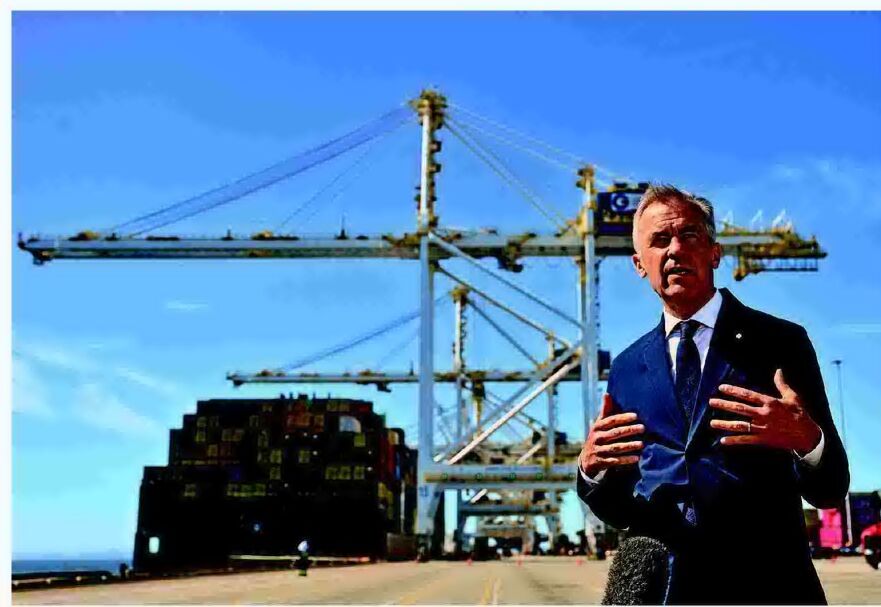
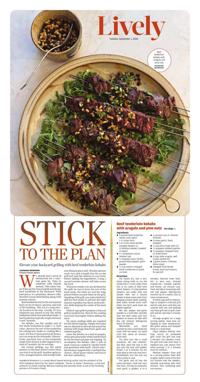
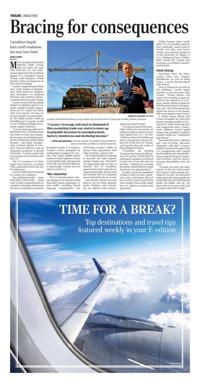
Canada's Prime Minister Mark Carney speaks July 30 at the Port of Vancouver in Delta, British Columbia.
TRADE | ANALYSIS
Most Canadians back Prime Minister Mark Carney after he broke off trade talks with the U.S., but widespread approval of his pushback against U.S. President Donald Trump could disappear within months as the consequences of the trade war emerge.
Carney's negotiating position also could weaken if Republicans retain power in Congress after November U.S. midterm elections and reinforce American protectionism under Trump.
Carney is one of the few global leaders to retaliate against U.S. tariffs, despite Canada's dependence on U.S. buyers for about 70% of its exports. On Aug. 25, his government announced dollar-for-dollar counter-tariffs on $20 billion of U.S. goods, as well as a $5.41 billion package of economic support measures.
"Carney's leverage will start to diminish if this escalating trade war starts to show up in palpable increases in unemployment, factory shutdowns and declining income," said Julian Karaguesian, a former adviser at Canada's Finance Ministry and an economics professor at McGill University. "Canada cannot win an economic war of attrition with the U.S."
The U.S. economy is 13 times larger than Canada's, a country with a population about the size of California's.
Carney's office did not respond to a request for comment.
The additional tariffs — from both sides of the border — along with Trump's renewed threats to Canada's sovereignty, mark one of the most acrimonious moments in modern Canada-U.S. relations. Trump's actions prompted an outpouring of support for Carney, who urged middle-power nations to band together to form a new global order and pursued new trade and security alliances to disentangle Canada from its reliance on the U.S.
'War mentality'
The U.S. introduced last-minute changes to its tentative trade deal with Canada, adjusting U.S. auto tariffs, curtailing French language requirements and restricting Canada's ability to pursue trade agreements with other countries, Carney said.
He invoked military language to describe the trade dispute, saying Canada was "attacked." An Angus Reid poll on Aug. 23 showed 76% of Canadians approved of Carney's decision to suspend trade talks. But the same poll showed 40% of Canadians are worried their jobs are at risk.
Dan Arnold, a former research director for ex-Prime Minister Justin Trudeau, said Canadians are aligned with Carney's approach toward Trump. "It's like any kind of war mentality where you see people are willing to make sacrifices to press back against the U.S.," he said. "Politics is about storytelling and there is the greatest cartoon villain ever in the form of Trump," said Arnold, who now works at the polling firm Pollara.
"Canadians are blaming Trump for the economic difficulties, not Carney," Arnold said. He estimated Canadians would back Carney for at least the next six months. "Whether he can keep the public behind him for longer than that is an open question."
Canada's economy weathered Trump's tariffs on steel, aluminum, autos and lumber. Most of the country's exports previously were exempt from tariffs under the U.S.-Mexico-Canada trade agreement.
While Trump's latest tariffs affect 5% of Canadian exports, they eventually could result in 90,000 lost jobs, said Trevor Tombe, an economics professor at the University of Calgary. A U.S. withdrawal from USMCA likely would tilt Canada into recession, according to Canada's central bank.
Clock ticking
Americans favor the Democratic Party over Trump's Republicans on cost-of-living issues, a recent Reuters/Ipsos poll showed.
Even if Democrats do well in the midterms, Carney might continue to face pressure from Trump. "Trump ignores the courts, he's running a major war without the approval of Congress, and he's started a trade war with the entire planet," Karaguesian said. "Even if the Democrats regain the House or the Senate, that is not going to stop Trump."
A White House official said Trump leveraged his executive powers to impose tariffs on Canada for its unfair trade practices and suggestions that a Democratic midterm victory might temper the president's policies toward Canada are "a desperate pipe dream."
Expected job losses, inflation and cost-of-living pressures ultimately will limit Carney's ability to push back against the U.S., Karaguesian said. Canada has the highest rate of food inflation among all Group of 7 industrial countries and has faced a housing affordability crisis for years.
"Canada can push out more exports to the rest of the world, but Carney's clock is already running out," he said. "At some point when more and more people are losing their jobs and visiting food banks, the public will say, 'we know this is not your fault, but go make a deal with Trump.'"
"Carney's leverage will start to diminish if this escalating trade war starts to show up in palpable increases in unemployment, factory shutdowns and declining income."
— Julian Karaguesian, a former adviser at Canada's Finance Ministry and an economics professor at McGill University