

'A SURPRISE FOR SURE'
NC biologists discover endangered bat species after decade-long search
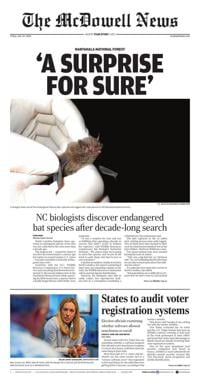
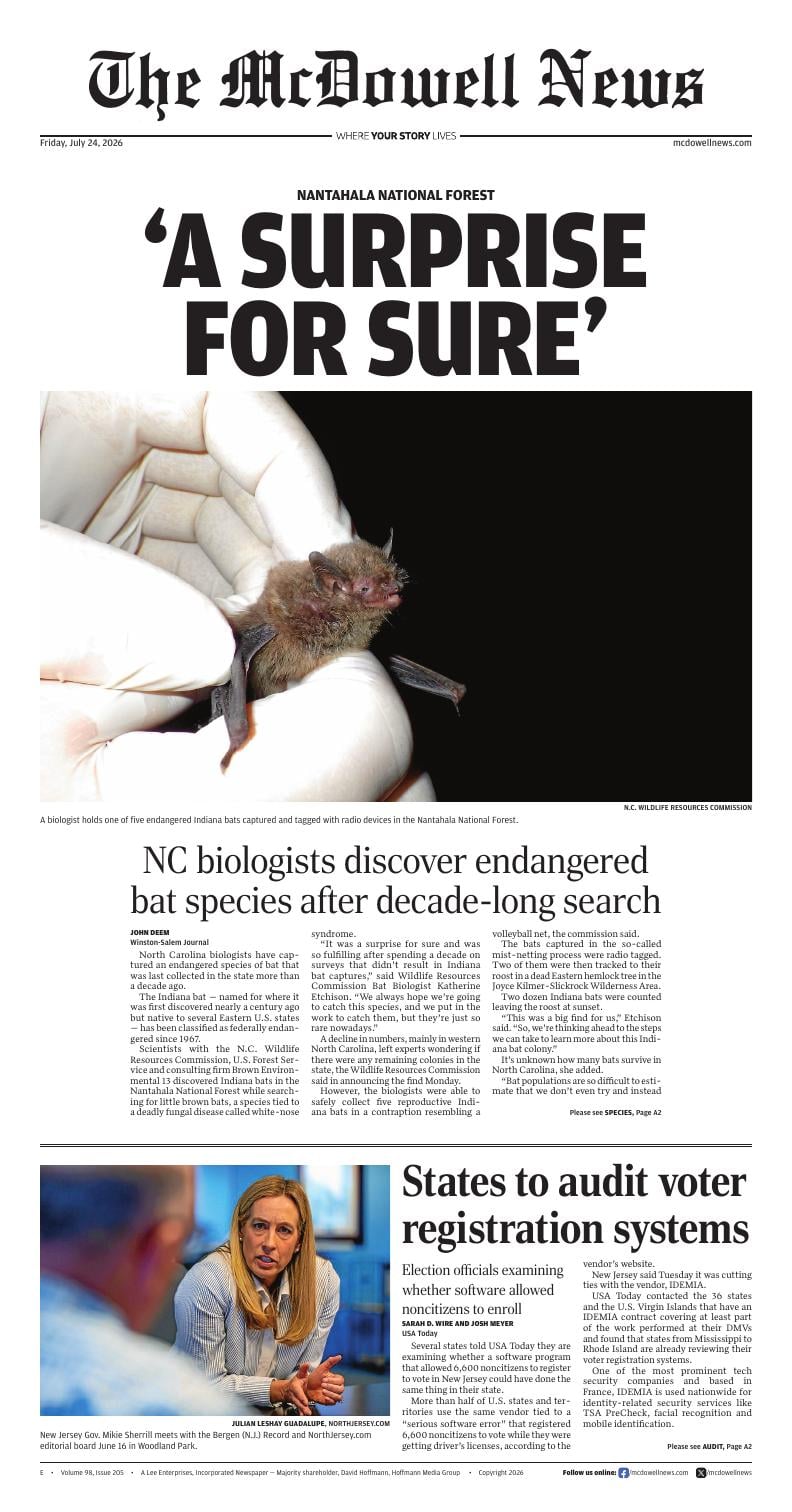
A biologist holds one of five endangered Indiana bats captured and tagged with radio devices in the Nantahala National Forest.
NANTAHALA NATIONAL FOREST
North Carolina biologists have captured an endangered species of bat that was last collected in the state more than a decade ago.
The Indiana bat — named for where it was first discovered nearly a century ago but native to several Eastern U.S. states — has been classified as federally endangered since 1967.
Scientists with the N.C. Wildlife Resources Commission, U.S. Forest Service and consulting firm Brown Environmental 13 discovered Indiana bats in the Nantahala National Forest while searching for little brown bats, a species tied to a deadly fungal disease called white-nose syndrome.
"It was a surprise for sure and was so fulfilling after spending a decade on surveys that didn't result in Indiana bat captures," said Wildlife Resources Commission Bat Biologist Katherine Etchison. "We always hope we're going to catch this species, and we put in the work to catch them, but they're just so rare nowadays."
A decline in numbers, mainly in western North Carolina, left experts wondering if there were any remaining colonies in the state, the Wildlife Resources Commission said in announcing the find Monday.
However, the biologists were able to safely collect five reproductive Indiana bats in a contraption resembling a volleyball net, the commission said.
The bats captured in the so-called mist-netting process were radio tagged. Two of them were then tracked to their roost in a dead Eastern hemlock tree in the Joyce Kilmer-Slickrock Wilderness Area.
Two dozen Indiana bats were counted leaving the roost at sunset.
"This was a big find for us," Etchison said. "So, we're thinking ahead to the steps we can take to learn more about this Indiana bat colony."
It's unknown how many bats survive in North Carolina, she added.
"Bat populations are so difficult to estimate that we don't even try and instead focus on population trends," Etchison explained. "Indiana bats were very rare before white-nose syndrome and then became so rare after white-nose syndrome that we go for years without finding them despite attempts."
About white-nose syndrome
The Wildlife Resources Commission offered this information on the disease:
■ An estimated 6.7 million bats have died since 2006 because of white-nose syndrome.
■ More than half of the bat species in the U.S. are in severe decline or listed as endangered.
■ White-nose syndrome was first found in North Carolina in 2011 and affects seven bat species.
■ In North Carolina, white-nose syndrome impacts have been severe in the mountains, while Piedmont bats have shown no population decline. The disease has not been found within the Coastal Plain.
John deem covers the Triad for the Winston-Salem Journal and Greensboro News & record. Contact him at john.deem@lee.net.