
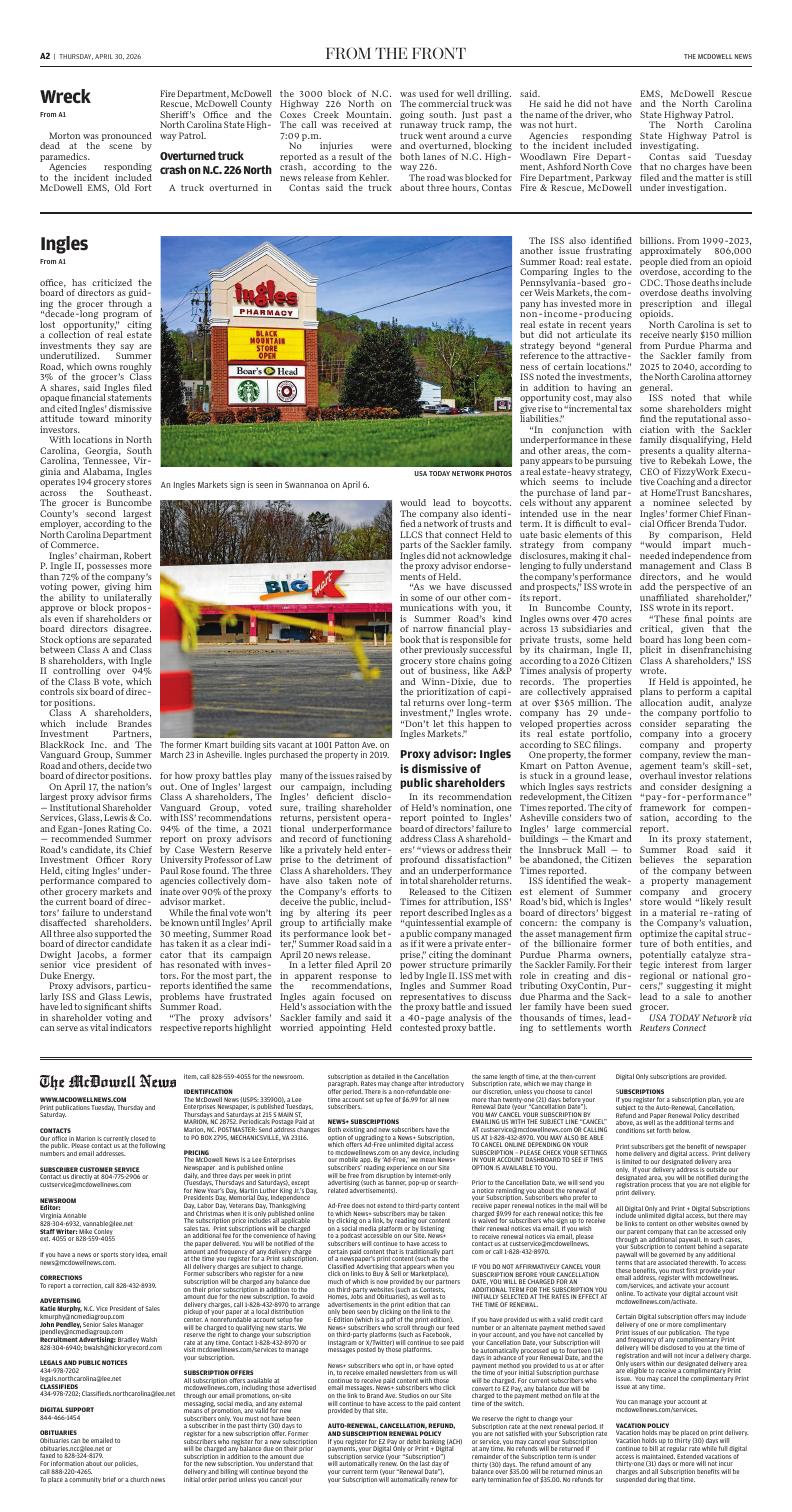
INGLES BOARD FIGHT
Proxy advisors back Sackler-linked firm for Ingles board
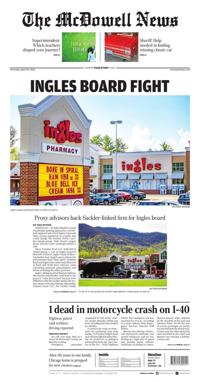
Ingles along Long Shoals Road in Arden on April 2.
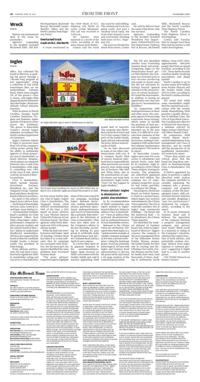
Trucks sit in the parking lot outside Ingles Market in Swannanoa on April 6.
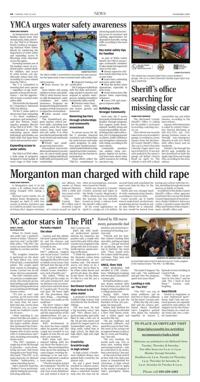
An Ingles Markets sign is seen in Swannanoa on April 6.
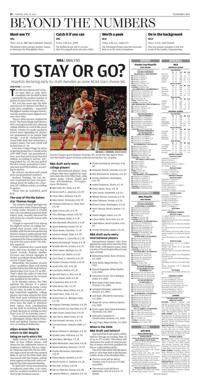
The former Kmart building sits vacant at 1001 Patton Ave. on March 23 in Asheville. Ingles purchased the property in 2019.
ASHEVILLE — As Ingles Markets annual shareholder meeting approaches, two bitterly opposed sides have begun to present their closing arguments in a battle that could change the western North Carolina-based grocer. Wall Street's largest proxy advisors have seemingly picked a side.
Since Summer Road LLC indicated it would pursue a seat on Ingles board of directors in March, Ingles' board of directors leaders have waged a press release war with Summer Road. Since April 1, Summer Road and Ingles have collectively filed over 12 back-and-forth press releases, some containing extensive presentations and letters attacking the others position.
Ingles' sitting board of directors believes the outside shareholder could lead to the grocer's "value destruction" because of its affiliation with the Sackler family, the former owners of Purdue Pharma. Meanwhile, Summer Road LLC, the Sackler family office, has criticized the board of directors as guiding the grocer through a "decade-long program of lost opportunity," citing a collection of real estate investments they say are underutilized. Summer Road, which owns roughly 3% of the grocer's Class A shares, said Ingles filed opaque financial statements and cited Ingles' dismissive attitude toward minority investors.
With locations in North Carolina, Georgia, South Carolina, Tennessee, Virginia and Alabama, Ingles operates 194 grocery stores across the Southeast. The grocer is Buncombe County's second largest employer, according to the North Carolina Department of Commerce.
Ingles' chairman, Robert P. Ingle II, possesses more than 72% of the company's voting power, giving him the ability to unilaterally approve or block proposals even if shareholders or board directors disagree. Stock options are separated between Class A and Class B shareholders, with Ingle II controlling over 94% of the Class B vote, which controls six board of director positions.
Class A shareholders, which include Brandes Investment Partners, BlackRock Inc. and The Vanguard Group, Summer Road and others, decide two board of director positions.
On April 17, the nation's largest proxy advisor firms — Institutional Shareholder Services, Glass, Lewis & Co. and Egan-Jones Rating Co. — recommended Summer Road's candidate, its Chief Investment Officer Rory Held, citing Ingles' underperformance compared to other grocery markets and the current board of directors' failure to understand disaffected shareholders. All three also supported the board of director candidate Dwight Jacobs, a former senior vice president of Duke Energy.
Proxy advisors, particularly ISS and Glass Lewis, have led to significant shifts in shareholder voting and can serve as vital indicators for how proxy battles play out. One of Ingles' largest Class A shareholders, The Vanguard Group, voted with ISS' recommendations 94% of the time, a 2021 report on proxy advisors by Case Western Reserve University Professor of Law Paul Rose found. The three agencies collectively dominate over 90% of the proxy advisor market.
While the final vote won't be known until Ingles' April 30 meeting, Summer Road has taken it as a clear indicator that its campaign has resonated with investors. For the most part, the reports identified the same problems have frustrated Summer Road.
"The proxy advisors' respective reports highlight many of the issues raised by our campaign, including Ingles' deficient disclosure, trailing shareholder returns, persistent operational underperformance and record of functioning like a privately held enterprise to the detriment of Class A shareholders. They have also taken note of the Company's efforts to deceive the public, including by altering its peer group to artificially make its performance look better," Summer Road said in a April 20 news release.
In a letter filed April 20 in apparent response to the recommendations, Ingles again focused on Held's association with the Sackler family and said it worried appointing Held would lead to boycotts. The company also identified a network of trusts and LLCS that connect Held to parts of the Sackler family. Ingles did not acknowledge the proxy advisor endorsements of Held.
"As we have discussed in some of our other communications with you, it is Summer Road's kind of narrow financial playbook that is responsible for other previously successful grocery store chains going out of business, like A&P and Winn-Dixie, due to the prioritization of capital returns over long-term investment," Ingles wrote. "Don't let this happen to Ingles Markets."
Proxy advisor: Ingles is dismissive of public shareholders
In its recommendation of Held's nomination, one report pointed to Ingles' board of directors' failure to address Class A shareholders' "views or address their profound dissatisfaction" and an underperformance in total shareholder returns.
Released to the Citizen Times for attribution, ISS' report described Ingles as a "quintessential example of a public company managed as if it were a private enterprise," citing the dominant power structure primarily led by Ingle II. ISS met with Ingles and Summer Road representatives to discuss the proxy battle and issued a 40-page analysis of the contested proxy battle.
The ISS also identified another issue frustrating Summer Road: real estate.Comparing Ingles to the Pennsylvania-based grocer Weis Markets, the company has invested more in non-income-producing real estate in recent years but did not articulate its strategy beyond "general reference to the attractiveness of certain locations." ISS noted the investments, in addition to having an opportunity cost, may also give rise to "incremental tax liabilities."
"In conjunction with underperformance in these and other areas, the company appears to be pursuing a real estate-heavy strategy, which seems to include the purchase of land parcels without any apparent intended use in the near term. It is difficult to evaluate basic elements of this strategy from company disclosures, making it challenging to fully understand the company's performance and prospects," ISS wrote in its report.
In Buncombe County, Ingles owns over 470 acres across 13 subsidiaries and private trusts, some held by its chairman, Ingle II, according to a 2026 Citizen Times analysis of property records. The properties are collectively appraised at over $365 million. The company has 29 undeveloped properties across its real estate portfolio, according to SEC filings.
One property, the former Kmart on Patton Avenue, is stuck in a ground lease, which Ingles says restricts redevelopment, the Citizen Times reported. The city of Asheville considers two of Ingles' large commercial buildings — the Kmart and the Innsbruck Mall — to be abandoned, the Citizen Times reported.
ISS identified the weakest element of Summer Road's bid, which is Ingles' board of directors' biggest concern: the company is the asset management firm of the billionaire former Purdue Pharma owners, the Sackler Family. For their role in creating and distributing OxyContin, Purdue Pharma and the Sackler family have been sued thousands of times, leading to settlements worth billions. From 1999-2023, approximately 806,000 people died from an opioid overdose, according to the CDC. Those deaths include overdose deaths involving prescription and illegal opioids.
North Carolina is set to receive nearly $150 million from Purdue Pharma and the Sackler family from 2025 to 2040, according to the North Carolina attorney general.
ISS noted that while some shareholders might find the reputational association with the Sackler family disqualifying, Held presents a quality alternative to Rebekah Lowe, the CEO of FizzyWork Executive Coaching and a director at Home Trust Bancshares, a nominee selected by Ingles' former Chief Financial Officer Brenda Tudor.
By comparison, Held "would impart much needed independence from management and Class B directors, and he would add the perspective of an unaffiliated shareholder," ISS wrote in its report.
"These final points are critical, given that the board has long been complicit in disenfranchising Class A shareholders," ISS wrote.
If Held is appointed, he plans to perform a capital allocation audit, analyze the company portfolio to consider separating the company into a grocery company and property company, review the management team's skill-set, overhaul investor relations and consider designing a "pay-for-performance" framework for compensation, according to the report.
In its proxy statement, Summer Road said it believes the separation of the company between a property management company and grocery store would "likely result in a material re-rating of the Company's valuation, optimize the capital structure of both entities, and potentially catalyze strategic interest from larger regional or national grocers," suggesting it might lead to a sale to another grocer.
USA TODAY Network via Reuters Connect