
US, IRAN REACH DEAL TO END WAR
Peace framework set to be officially signed Friday
Vessels at the Strait of Hormuz are seen Sunday from Musandam, Oman.
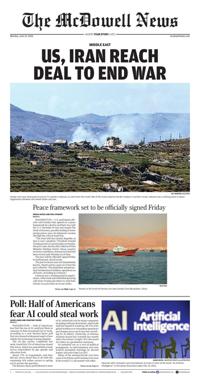
Smoke rises near destroyed structures in southern Lebanon, as seen from the Israeli side of the Israel-Lebanon border Sunday in northern Israel. Lebanon was a sticking point in peace negotiations between the United States and Iran.
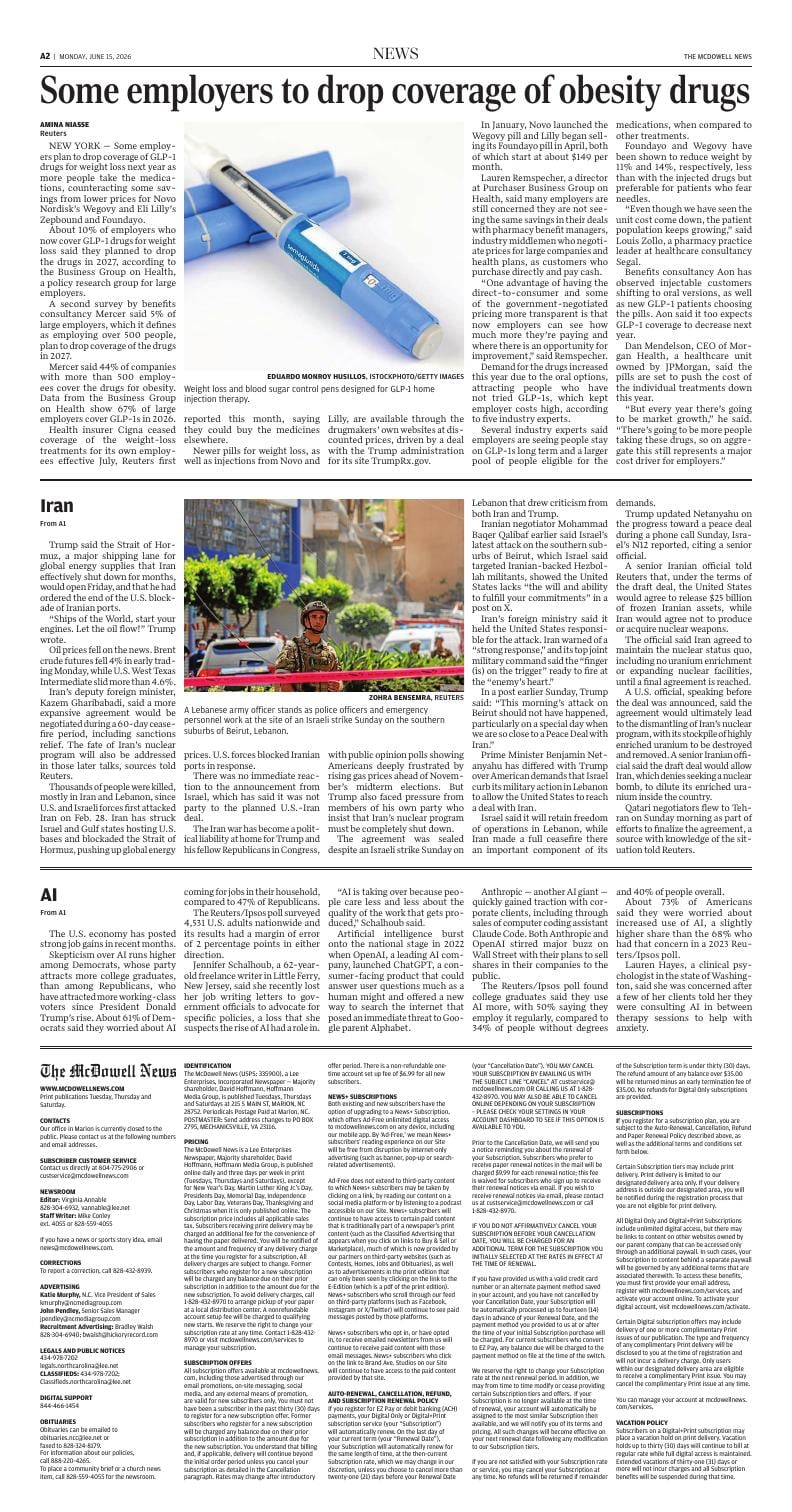
A Lebanese army officer stands as police officers and emergency personnel work at the site of an Israeli strike Sunday on the southern suburbs of Beirut, Lebanon.
MIDDLE EAST
WASHINGTON — U.S. and Iranian officials said Sunday they agreed on a peace framework for a deal to end their war, halt the U.S. blockade of Iran and reopen the Strait of Hormuz, possibly leading to lower energy prices once oil shipments resume through the critical waterway.
"The Deal with the Islamic Republic of Iran is now complete," President Donald Trump posted on social media on Sunday. His post came shortly after Pakistan Prime Minister Shehbaz Sharif, whose country served as a mediator, announced a deal had been struck early Monday local time.
The pact will be officially signed Friday in Switzerland, Sharif wrote.
The precise terms were not immediately known. Sharif said in a post on X that the pact called for "the immediate and permanent termination of military operations on all fronts, including in Lebanon."
Lebanon was a sticking point in negotiations, with Israel and Hezbollah ignoring calls from Trump and others to stop their attacks on each other in recent weeks.
Trump said the Strait of Hormuz, a major shipping lane for global energy supplies that Iran effectively shut down for months, would open Friday, and that he had ordered the end of the U.S. blockade of Iranian ports.
"Ships of the World, start your engines. Let the oil flow!" Trump wrote.
Oil prices fell on the news. Brent crude futures fell 4% in early trading Monday, while U.S. West Texas Intermediate slid more than 4.6%.
Iran's deputy foreign minister, Kazem Gharibabadi, said a more expansive agreement would be negotiated during a 60-day ceasefire period, including sanctions relief. The fate of Iran's nuclear program will also be addressed in those later talks, sources told Reuters.
Thousands of people were killed, mostly in Iran and Lebanon, since U.S. and Israeli forces first attacked Iran on Feb. 28. Iran has struck Israel and Gulf states hosting U.S. bases and blockaded the Strait of Hormuz, pushing up global energy prices. U.S. forces blocked Iranian ports in response.
There was no immediate reaction to the announcement from Israel, which has said it was not party to the planned U.S.-Iran deal.
The Iran war has become a political liability at home for Trump and his fellow Republicans in Congress, with public opinion polls showing Americans deeply frustrated by rising gas prices ahead of November's midterm elections. But Trump also faced pressure from members of his own party who insist that Iran's nuclear program must be completely shut down.
The agreement was sealed despite an Israeli strike Sunday on Lebanon that drew criticism from both Iran and Trump.
Iranian negotiator Mohammad Baqer Qalibaf earlier said Israel's latest attack on the southern suburbs of Beirut, which Israel said targeted Iranian-backed Hezbollah militants, showed the United States lacks "the will and ability to fulfill your commitments" in a post on X.
Iran's foreign ministry said it held the United States responsible for the attack. Iran warned of a "strong response," and its top joint military command said the "finger (is) on the trigger" ready to fire at the "enemy's heart."
In a post earlier Sunday, Trump said: "This morning's attack on Beirut should not have happened, particularly on a special day when we are so close to a Peace Deal with Iran."
Prime Minister Benjamin Netanyahu has differed with Trump over American demands that Israel curb its military action in Lebanon to allow the United States to reach a deal with Iran.
Israel said it will retain freedom of operations in Lebanon, while Iran made a full ceasefire there an important component of its demands.
Trump updated Netanyahu on the progress toward a peace deal during a phone call Sunday, Israel's N12 reported, citing a senior official.
A senior Iranian official told Reuters that, under the terms of the draft deal, the United States would agree to release $25 billion of frozen Iranian assets, while Iran would agree not to produce or acquire nuclear weapons.
The official said Iran agreed to maintain the nuclear status quo, including no uranium enrichment or expanding nuclear facilities, until a final agreement is reached.
A U.S. official, speaking before the deal was announced, said the agreement would ultimately lead to the dismantling of Iran's nuclear program, with its stockpile of highly enriched uranium to be destroyed and removed. A senior Iranian official said the draft deal would allow Iran, which denies seeking a nuclear bomb, to dilute its enriched uranium inside the country.
Qatari negotiators flew to Tehran on Sunday morning as part of efforts to finalize the agreement, a source with knowledge of the situation told Reuters.