
US LAUNCHES STRIKES ON IRANIAN ISLAND
Reports: Iran fired missiles at US forces in Jordan; almost all 'intercepted'
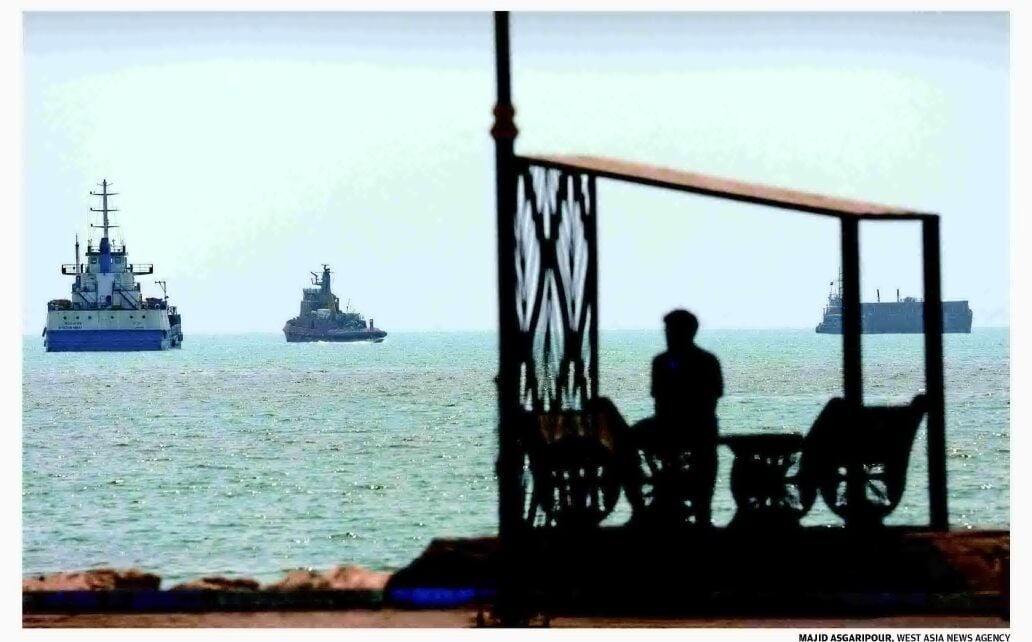
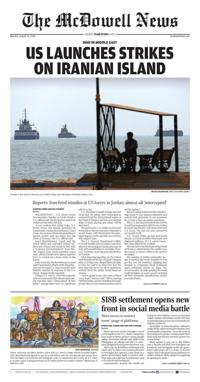
Vessels in the Strait of Hormuz are visible Friday near the beach of Bandar Abbas, Iran.
WAR IN MIDDLE EAST
WASHINGTON — U.S. forces struck two launchers Sunday on Larak Island, a U.S. official said, the first known American strikes on Iran since late July.
"I can confirm that earlier today U.S. forces struck two Iranian launchers on Larak Island. Islamic Revolutionary Guard Corps forces were observed preparing to launch rockets with sea mines into the Strait of Hormuz," the U.S. official said.
Iran's Revolutionary Guard said the attack killed and wounded several soldiers and citizens and would be met with a "response and punishment" from Tehran, Iranian state media reported. Iran's semi-official Tasnim news agency reported the U.S. carried out a drone strike on the island.
Later in the day, the Revolutionary Guard said it launched an attack on the King Hussein and Al Azraq U.S. bases in Jordan with ballistic missiles in response to the U.S. attack, Iranian media reported.
Citing a U.S. source, a Fox News reporter said on social media that almost all incoming missiles were "intercepted at this point," noting there were no significant effects so far. U.S. President Donald Trump s aid last week that all mines w ere detonated or removed from the international waters of the Strait of Hormuz and Iran was told that ships or boats placing new mines will be destroyed.
The last known U.S. strikes on Iran were in late July as the war reached a stalemate in recent weeks, with Washington threatening to impose costly sanctions on countries that support Iran.
The U.S. Treasury Department is likely to unveil weekly new secondary sanctions aimed at increasing economic pressure on Iran, with an initial focus on banks, Treasury Secretary Scott Bessent told Reuters on Sunday.
After imposing penalties on the United Arab Emirates branches of Egypt's Banque Misr on Friday over alleged financial links to Iran, he said in an interview that the next step may be to cut off an institution entirely from the dollar-based financial system.
"You're going to see a lot more of these every week," Bessent said. "We're starting with the banks, and we're telling the banks it's not okay to have Iranian money and to aid the regime." Bessent said he intends to drive the message home to G20 finance ministers and central bank governors to cut economic ties to Iran or face secondary sanctions.
The U.S. and Israel attacked Iran on Feb. 28 and Iran responded with its own strikes on Israel and Persian Gulf states that host U.S. bases. The Iran war now crossed its six-month mark.
U.S.-Israeli strikes on Iran and Israeli attacks on Lebanon killed thousands and displaced millions; 18 U.S. service members were killed in the conflict.
The war led to the blockade of the Strait of Hormuz, which before the conflict saw the transit of about a fifth of the world's oil supply.
The number of visible commodity vessels transiting the strait dropped to five per day over the weekend, shipping data showed, as companies tread cautiously amid continued attacks on ships. The actual number of ships passing the strait could be higher, as some vessels switched off their automatic identification system to evade attacks.
Iran's Supreme Leader Mojtaba Khamenei urged Muslim countries, particularly those in the Persian Gulf, to unite against what he called their "real enemy" and said divisions among Muslims served the interests of their adversaries.
The message was published on Khamenei's Telegram account for Islamic Unity Week, which marks the birthday of the Prophet Muhammad.
It called for Muslim unity, cooperation in various fields and mutual defense, saying anyone who creates divisions among Muslims, "knowingly or unknowingly," helps Islam's enemies.
It asked whether Palestinians would have been left "so helpless" if Muslims had been united.
Khamenei has not been seen in public since he was injured in the U.S.-Israeli airstrikes that launched the war and killed his father and previous supreme leader, Ayatollah Ali Khamenei.
His call for unity echoed a statement he made Friday to Iranians, when he said he banned actions that harm social cohesion and urged authorities to avoid "discouraging statements" that weaken national and public morale.
Khamenei specifically asked Gulf Arab rulers whether "rogues without identity" would have dared to covet their lands and possessions if the peoples and governments of the Gulf had been "united under the flag of Islam."
Since the 1979 Islamic Revolution, Gulf Arab monarchies viewed Iran's revolutionary ideology, including its anti-monarchic rhetoric and regional influence, as a threat to their political systems.
During the present conflict, Tehran struck U.S. military facilities as well as other infrastructure in Gulf states, underscoring the tensions between Tehran and its Gulf neighbors.
"My emphatic and repeated recommendation to the rulers of Islamic countries, especially the countries of West Asia and the Gulf, is to identify your real enemy, understand his plan and confront it," Khamenei said.